Victoria Ordóñez
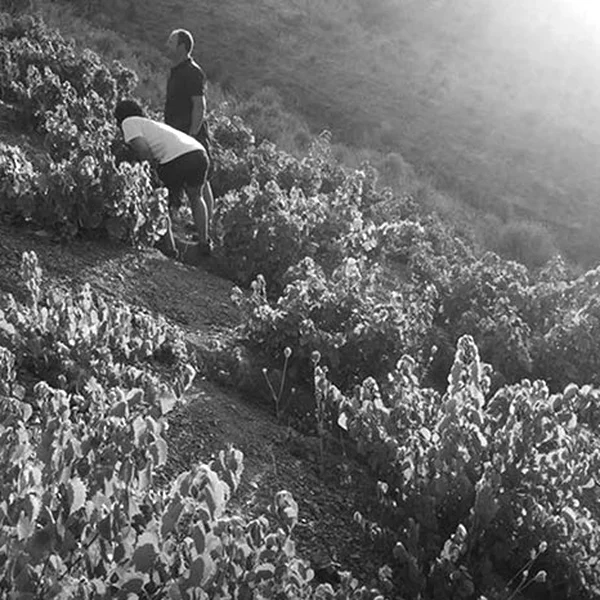 Victoria Ordóñez has dedicated herself to a mission: bringing back the historic grape variety Pedro Ximénez from the mountains of Málaga. From the 17th to the 19th century, these grapes made Málaga world-famous – then they almost completely disappeared after phylloxera. Today, Victoria practices biodynamic farming on extreme, steep slopes at altitudes of up to 1,000 metres, where the harvest is still transported by mules.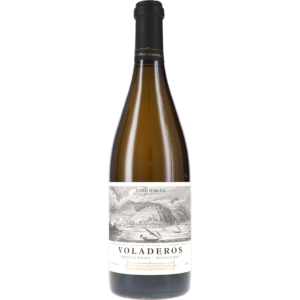
A forgotten wine region reawakens
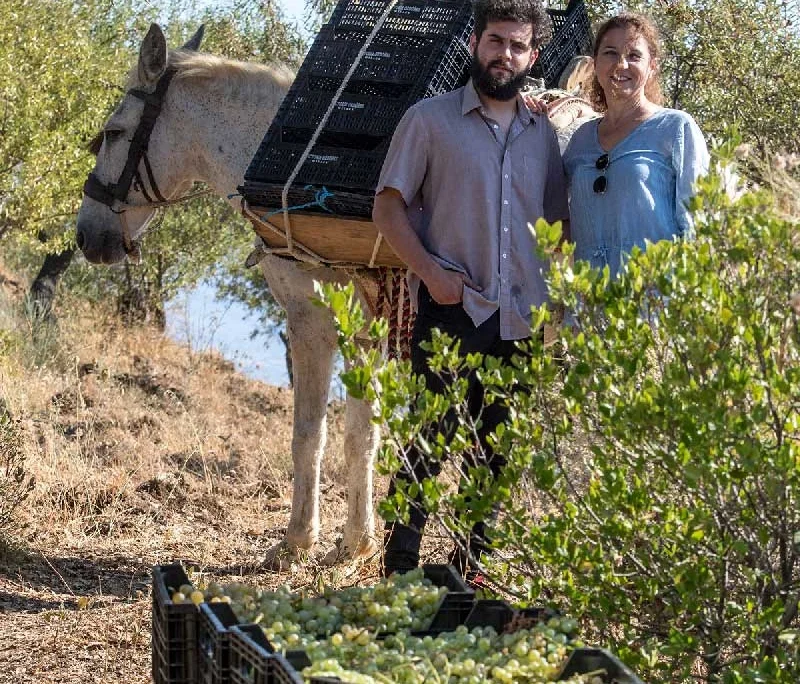
The Montes de Málaga are steep, rugged mountains just a few kilometres north of the coastal city. Vines once grew here that made Málaga one of the most famous names in European wine. After the phylloxera disaster of the late 19th century the area was reforested and its wine culture fell into oblivion. In 2015 Victoria Ordóñez set out in search of the surviving old Pedro Ximénez vines. It took months of research in small plots to tell the rare variety apart from the other vines in the old mixed vineyards.
Heroic viticulture
Victoria Ordóñez's vineyards lie between 800 and 1,000 metres above sea level in the Sierra de Málaga nature park. Despite the proximity of the Mediterranean, the climate here is almost continental, with hot days and cool nights. The extremely steep slopes rule out machinery; even seasoned farmhands speak of "heroic viticulture". The grapes are picked by hand and carried along narrow paths to Romero the mule, who takes them to the collection point. From there a small van brings them to the winery in the city of Málaga, the only working bodega within the city limits.

Dry Pedro Ximénez
What Victoria Ordóñez makes is a sensation: dry Pedro Ximénez. Most people know the variety only as a syrupy dessert wine from Jerez. Historically, however, Málaga produced dry wines of great elegance, and Victoria picks up that thread. The grapes are farmed biodynamically, fermented spontaneously and aged in small French oak barrels. Yields are startlingly low, rarely more than 1,000 kilograms per hectare. The result is wines of crystalline clarity, with notes of white flowers, almonds and a mineral finish that recalls the slate soils.
Moscatel from the Axarquía
Alongside Pedro Ximénez, Victoria devotes herself to another indigenous variety: Moscatel from the upper Axarquía. These vineyards sit even higher, at almost 1,000 metres, in the Sierra Tejeda nature park. Here she makes aromatic whites that combine the floral intensity of Moscatel with the freshness of altitude. Together with her son Guillermo, an agricultural engineer, Victoria now farms seven hectares of her own and buys grapes from 30 other growers, 40 hectares under contract in all.
A garage winery with vision
Founded in 2015, the bodega is in the city of Málaga, only minutes from the airport. Its 600 square metres house small stainless-steel tanks that allow each plot to be vinified separately, along with French oak barrels that are renewed every year. The concept follows the "garage wine" model: artisanal precision in small quantities. Victoria learnt her craft with Alois Kracher in Austria, from harvest to barrel ageing. Today she is one of the few women winemakers in Spain who make wine with their own hands, and she is putting a forgotten region back on the wine map. Envínate on Tenerife work with similar uncompromising rigour.