- Producer
- Trapet Père & Fils
- Grape variety
- Pinot Noir (Spätburgunder)
- Region
- Côte de Nuits
- Country
- France
- Vintage
- 2023
- Alcohol
- 13 % vol
- Volume
- 0.75 l
- Item no.
- 9910222172
Shipped with DHL Express — customs cleared to your door. · Flat-rate shipping CHF 15.00 — free from 12 bottles or CHF 300.00. · Pay by TWINT or card.
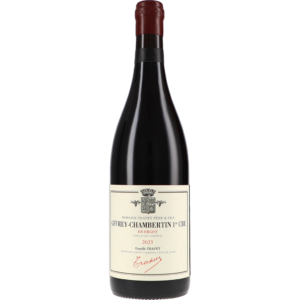
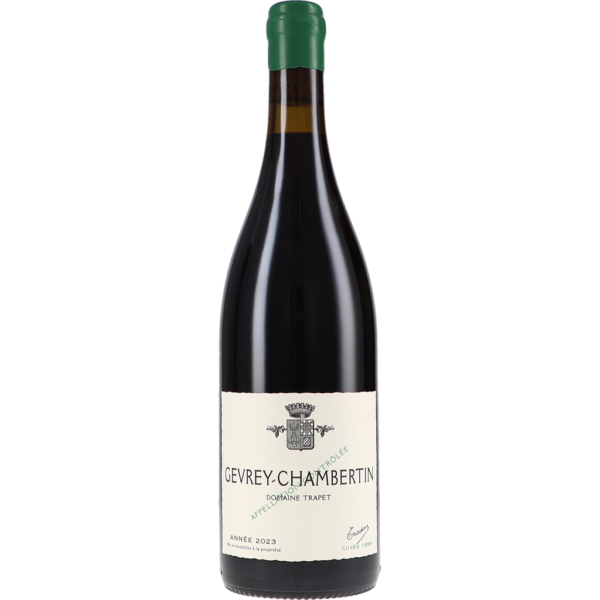
Gevrey-Chambertin Cuvée "1859" 2023
The Gevrey-Chambertin Cuvée "1859" 2023 from Trapet Père & Fils is a Pinot Noir from the Côte de Nuits, built on finesse rather than power.
CHF 135.50
Prices in CHF, including customs duty and all import charges, plus shipping CHF 15 (free from 12 bottles or CHF 300) — no further charges on delivery.
Available for Switzerland
✓ On your wishlist. — View wishlist
About this wine
Character
A Gevrey-Chambertin that draws its stature from precision rather than weight: 13.0% vol., dry, fine-grained tannin, aromatic depth. Jean-Louis Trapet, seventh generation, runs the domaine on the principle of accompanying the grapes and never forcing them.
Terroir and origin
The wine comes from Gevrey-Chambertin in the Côte de Nuits, where the domaine farms 18.5 hectares, including the three Grand Crus Chambertin, Chapelle-Chambertin and Latricières-Chambertin. The cuvée "1859" carries in its name the year the family acquired its first vineyard, "en Dérée."
Grape variety and vinification
Single-varietal Pinot Noir. In the cellar, work is done by gravity, observing rather than intervening; for the village wines, the proportion of new oak is 20 to 25 percent, so the barrel doesn't mask the fruit.
On the palate
Ruby red with violet highlights. On the nose, dark cherry, raspberry and blackberry, underscored by violet, earth, cinnamon and black pepper. The attack is juicy, the tannin silky, the acidity keeps the wine upright, and the finish stays long and mineral.
Food pairings
Entrecôte with herb butter, coq au vin, or braised leg of lamb with herbes de Provence. For a meatless option, grilled mushrooms with thyme butter work well; for cheese, aged Comté or Époisses.
Special features
The estate has worked biodynamically since 1996. The domaine traces back to Arthur Trapet, who in the 1880s secretly grafted onto American rootstock while it was still forbidden; the method was legalized in 1888. The Guide des meilleurs vins de France rates the domaine with three stars, its highest score.