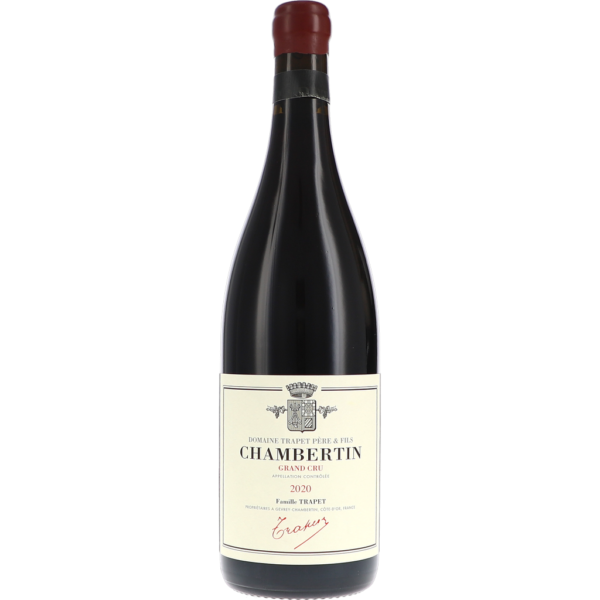
- Producer
- Trapet Père & Fils
- Grape variety
- Pinot Noir (Spätburgunder)
- Region
- Burgund
- Country
- France
- Vintage
- 2020
- Alcohol
- 13 % vol
- Volume
- 0.75 l
- Item no.
- 9910222121
Shipped with DHL Express — customs cleared to your door. · Flat-rate shipping CHF 15.00 — free from 12 bottles or CHF 300.00. · Pay by TWINT or card.
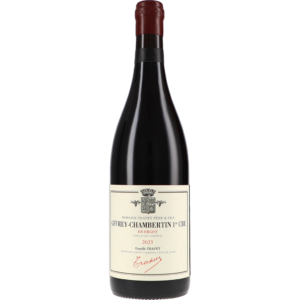
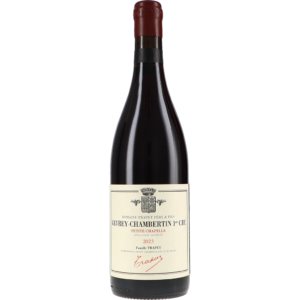
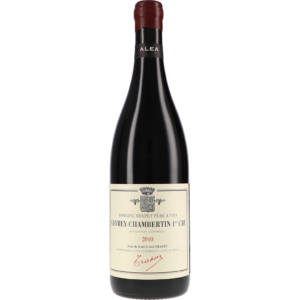
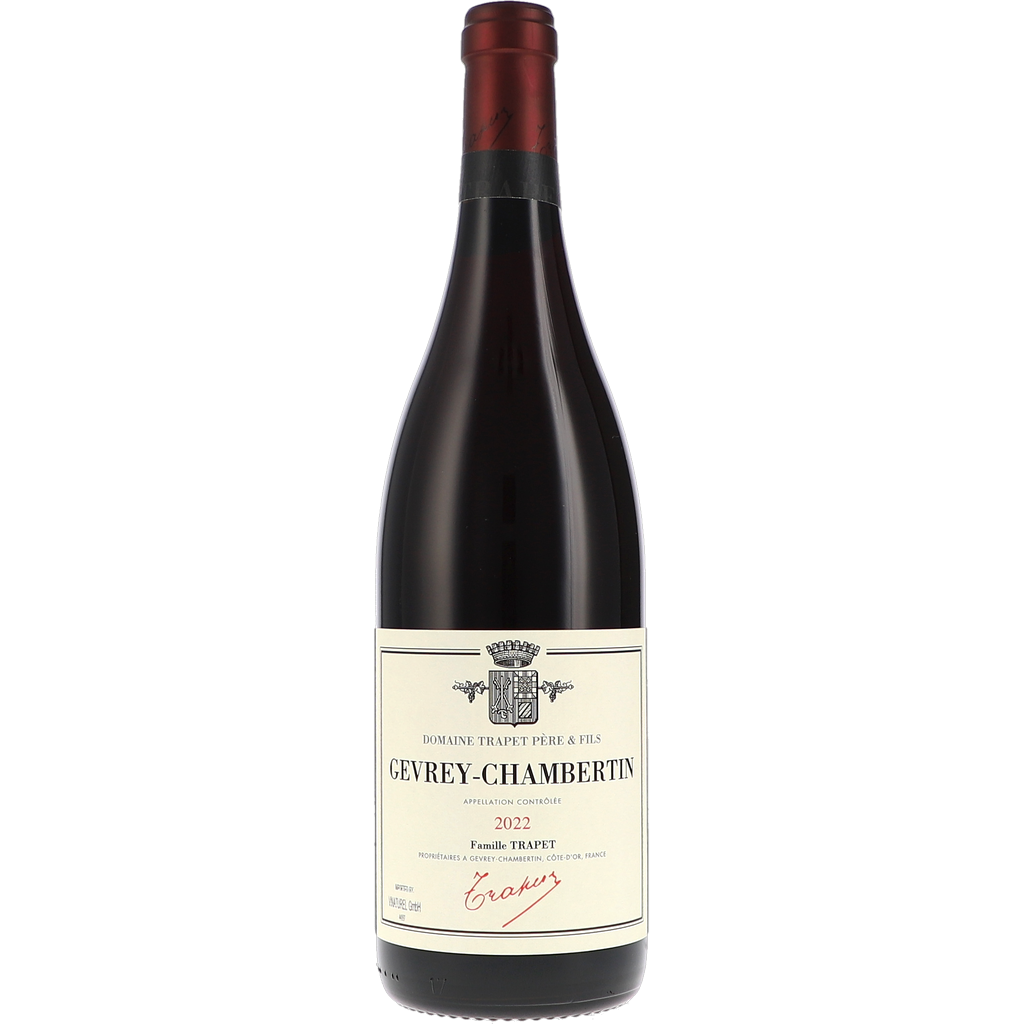
Chambertin Grand Cru 2020
A single-varietal Pinot Noir from the Grand Cru site of Chambertin, which Jean-Louis Trapet farms biodynamically on just under two hectares.
CHF 946.00
Prices in CHF, including customs duty and all import charges, plus shipping CHF 15 (free from 12 bottles or CHF 300) — no further charges on delivery.
Available for Switzerland
✓ On your wishlist. — View wishlist
About this wine
Character
A Pinot Noir whose greatness stems from finesse: fine-grained tannin, aromatic depth, clearly defined origin. At its core are morello cherry and ripe dark forest berries, alongside fine spice and an earthy note. Trapet seeks finesse, not power.
Terroir and origin
The Grand Cru site of Chambertin in Gevrey-Chambertin: just under two hectares, divided into three parcels, partly planted with century-old vines. Jean-Louis Trapet, seventh generation of Domaine Trapet Père & Fils, has farmed it biodynamically since 1996, with Demeter certification since 2009. His statement "Les hommes passent et la terre reste" describes his approach in the vineyard: to accompany, never to force.
Grape variety and vinification
Single-varietal Pinot Noir. For the Grand Crus, Trapet ferments 50 to 100 percent whole clusters, and the cellar work relies on gravity with minimal intervention. Ageing takes place in at most 50 percent new oak. 13.0% ABV, dry.
On the palate
A silky flow, fine-grained tannin, vibrant acidity. The finish stays long and clear, without the wine ever becoming loud.
Food pairings
Bresse chicken with morels, gently braised pheasant breast, or beef Wellington. Equally good with fine mushroom dishes and mature, not-too-dominant soft cheeses.
Special features
The estate traces back to Arthur Trapet, who secretly grafted onto American rootstock in the 1880s — banned at the time, legalised in 1888. The Guide des meilleurs vins de France awards the estate three stars, its highest rating.