Diel
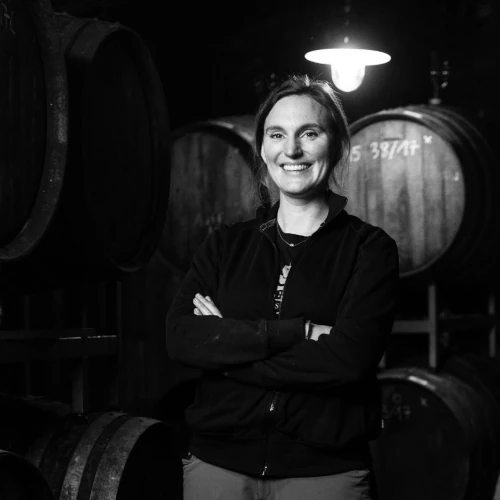 Slate in Pittermännchen, pebbles in Goldloch, iron in Burgberg. Schlossgut Diel at Burg Layen is among the very best the Nahe has to offer. Caroline Diel runs the VDP estate in the seventh generation: 26 hectares across three Grosse Lage sites, each with its own geological fingerprint. Falstaff, Feinschmecker and the FAZ have all named her Winemaker of the Year.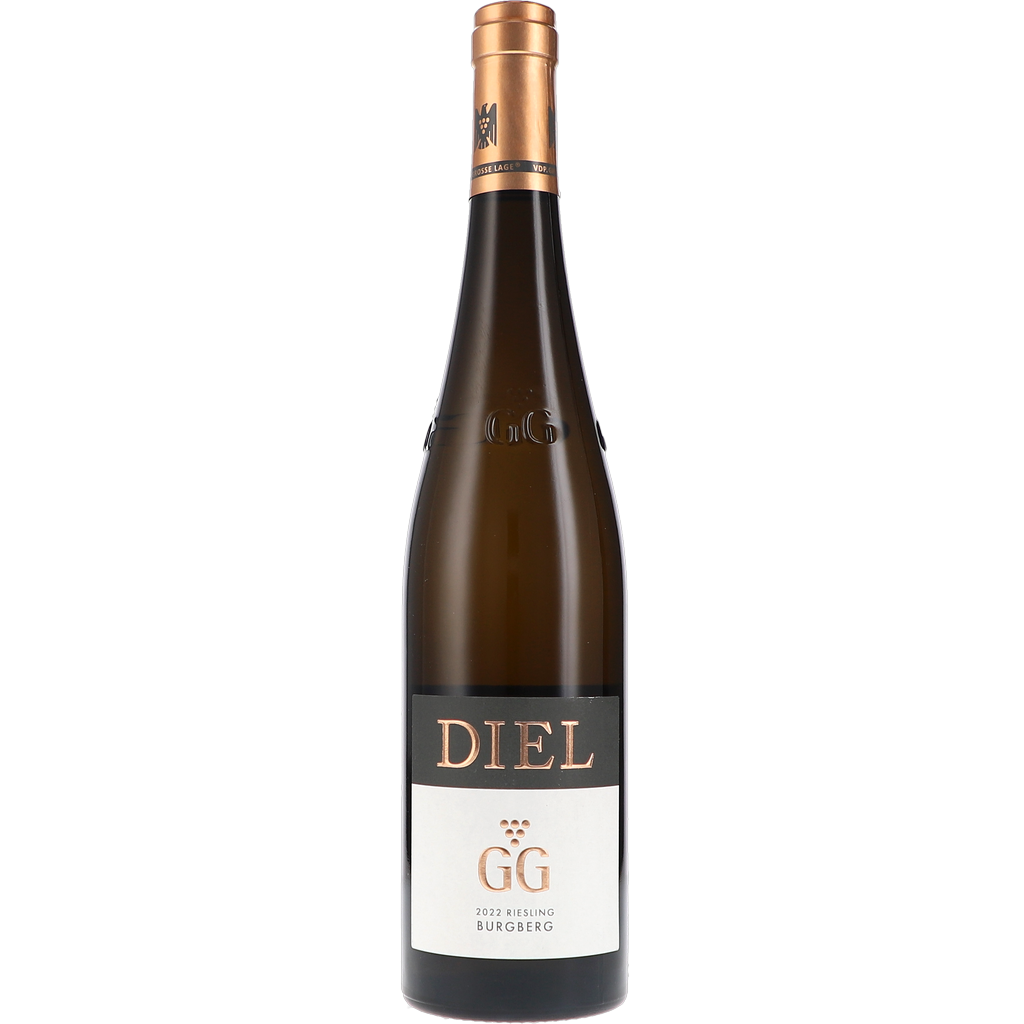
Three Sites, Three Worlds
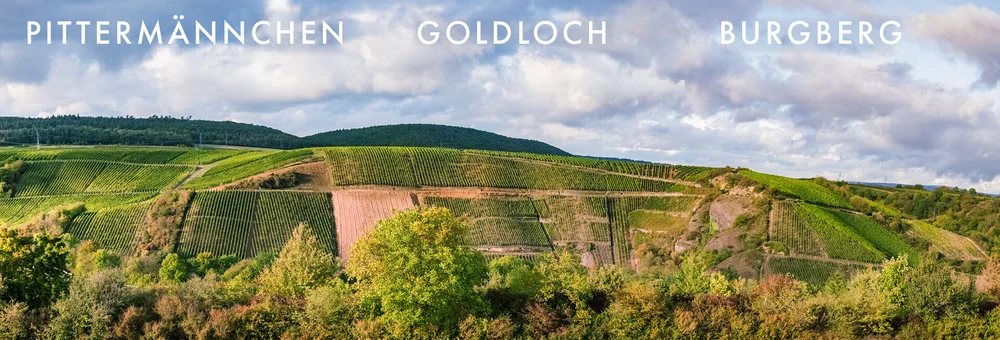
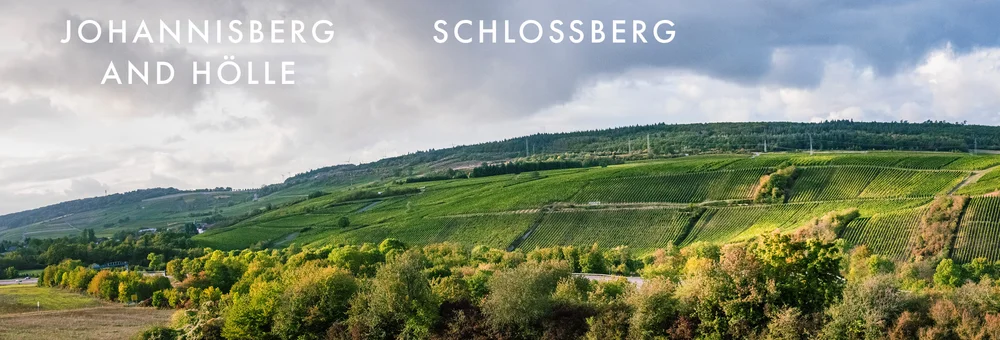
The Pittermännchen measures just one hectare. Grey Devonian slate, steep, hard to work. Its Rieslings taste of crushed chalk and grapefruit, delicate and playful. The Goldloch stretches across thirteen hectares of gravelly loam, yielding wines of juicy fullness: yellow stone fruit, ripe peach. Finally, the Burgberg lies in a bowl-shaped hollow with iron-rich loam: saline minerality, smoky depth, enormous potential. As early as 1901, all three sites were documented as first-class – long before the VDP classification system existed.
Caroline Diel
She studied oenology at Geisenheim and gained experience at Château Pichon Longueville in Bordeaux and at Domaine de la Romanée-Conti in Burgundy. She took over the cellar in 2006, and since 2017 she has run the estate together with her husband Sylvain. The Rieslings made here bear a clear signature: precise, mineral, without frills. Clemens Busch on the Mosel works with similar rigour – both estates rank among the very best German Riesling producers.
In the Cellar
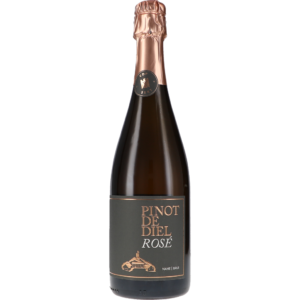
Riesling accounts for 65 per cent of the 26 hectares, the rest being Spätburgunder, Grauburgunder and Weißburgunder as well as Chardonnay. Selective hand harvesting, gentle pneumatic pressing, spontaneous fermentation with natural yeasts. The Riesling musts mature partly in stainless steel tanks, partly in traditional Stückfass casks made from regional oak. The Burgundian varieties are aged in a separate barrique cellar with a reduced proportion of new wood. The estate is a founding member of the Deutsches Barrique Forum and, with its Pinot de Diel, also produces VDP.SEKT.PRESTIGE – grower's sparkling wine from Burgundian varieties, aged on the lees for years.
Burg Layen Since 1802
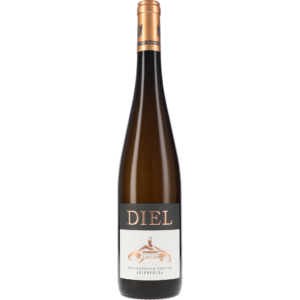
Johann Peter Diel acquired Burg Layen from Baron Dalberg at a time when it was occupied by Napoleonic troops. What began as a mixed farm is today a dedicated wine estate with five stars from Falstaff and Wein.Plus. Caroline Diel is driving the conversion to organic farming, and the estate already holds Fair Choice certification. The Goldloch Auslese shows what nobly sweet Riesling can be: perfect balance between residual sugar and acidity, a wine for eternity.