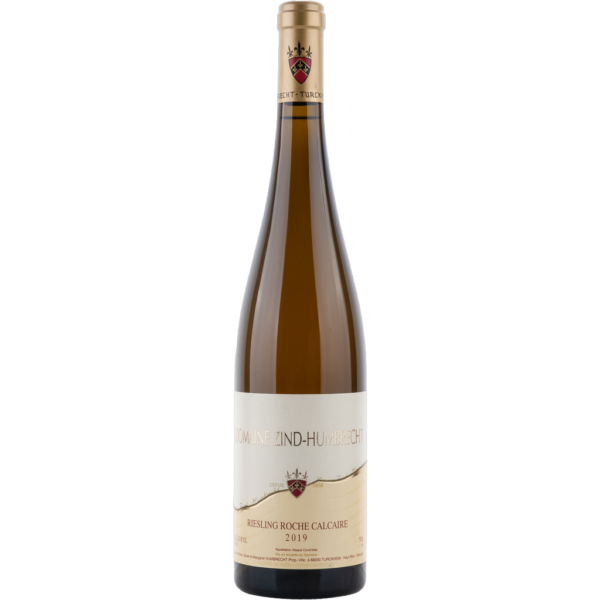
Riesling Roche Calcaire 2019
Dry Riesling from limestone-marked parcels around Gueberschwihr in Alsace, complemented by two young vineyards in Grand Cru Hengst.
CHF 34.00
Prices in CHF, including customs duty and all import charges, plus shipping CHF 15 (free from 12 bottles or CHF 300) — no further charges on delivery.
Available for Switzerland
✓ On your wishlist. — View wishlist
About this wine
Character
A dry Alsatian Riesling from limestone subsoil, intensely golden yellow in the glass and still reserved in its youth. Wines from this geology need time, sometimes years, before revealing their aromatic potential. What carries them from the start is an energetic acidity and an austerity that here stands for clarity and precision.
Terroir and origin
The wine comes largely from a blend of small vineyards around the village of Gueberschwihr, complemented by a small amount from two young vineyards in Grand Cru Hengst. In Gueberschwihr the marl and clay content is higher. Such limestone soils warm slowly and ripen late, but withstand drought and give the vines strength.
Grape variety and vinification
Pure varietal Riesling, raised by Olivier Humbrecht, the first Frenchman to hold the title Master of Wine, who farms the domaine's 42 hectares biodynamically. Fermentation dragged on for a long time, typical of this cuvée, which often shows one of the highest acidity levels; in 2019 the wine turned out dry and found its balance.
On the palate
On the nose, first limestone, then with vigorous aeration apple, lemon zest, young mango, angelica and coriander, with a subtle note of meat broth and oyster shell behind. The palate entry is finely structured, almost dancing, the acidity present, the radiance cool. Decant if possible and drink from large glasses.
Food pairings
Pikeperch on mushroom cream sauerkraut, noodle bowl with pak choi, mango, tofu and sesame oil as well as Grand Puy lentils with bacon, wild herb salad and a fruity dressing.
Special features
In 1996 Olivier Humbrecht converted the first five hectares to biodynamic farming. Yields are 30 to 40 hectolitres per hectare, the wines rest on the lees for at least six months and do not leave the cellar before one to two years of ageing.