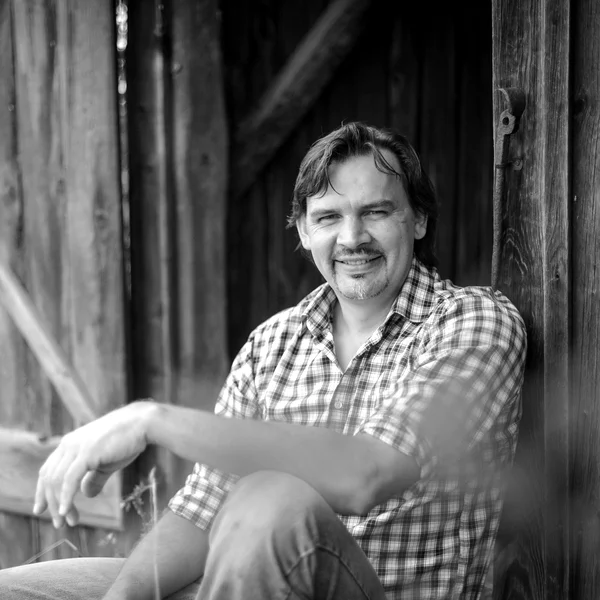
“I am simply not as good as nature.” This sentence sums up what drives
Karl Fritsch. At
Weinberghof Fritsch on the Wagram, 60 kilometres west of Vienna, it is not about control, but about guidance. Since 2006, he has been farming his 25 hectares biodynamically – as a founding member of respekt-BIODYN alongside like-minded winemakers such as Gernot Heinrich.
The south-facing loess terrace of the Wagram, with its limestone-rich soils, provides ideal conditions for
Grüner Veltliner and Roter Veltliner – the latter regularly achieving 94 Falstaff points at Fritsch. Then there is his secret trump card: Pinot Noir.
From war child to wine pioneer
The story of the Weinberghof begins with an escape. Karl Fritsch senior, born in Vienna in 1940, came to relatives in Oberstockstall as a five-year-old during the bombing raids. What began as a stopgap became a vocation: a captivating lecture by the viticultural pioneer
Lenz Moser in Krems ignited his passion for wine. In the mid-1960s, when most of his Wagram colleagues were still selling their wine in bulk or filling it into two-litre Doppler bottles, Fritsch senior already offered five
bottled wines, and he was one of the first to venture into red wine on the Wagram.
In 1989 he founded the growers' association "Wagramer Selektion", an alliance committed to the pursuit of quality, which he chaired for ten years. At the end of 2007 the estate was admitted to the
Traditionsweingüter Österreich, a recognition granted to only a few.
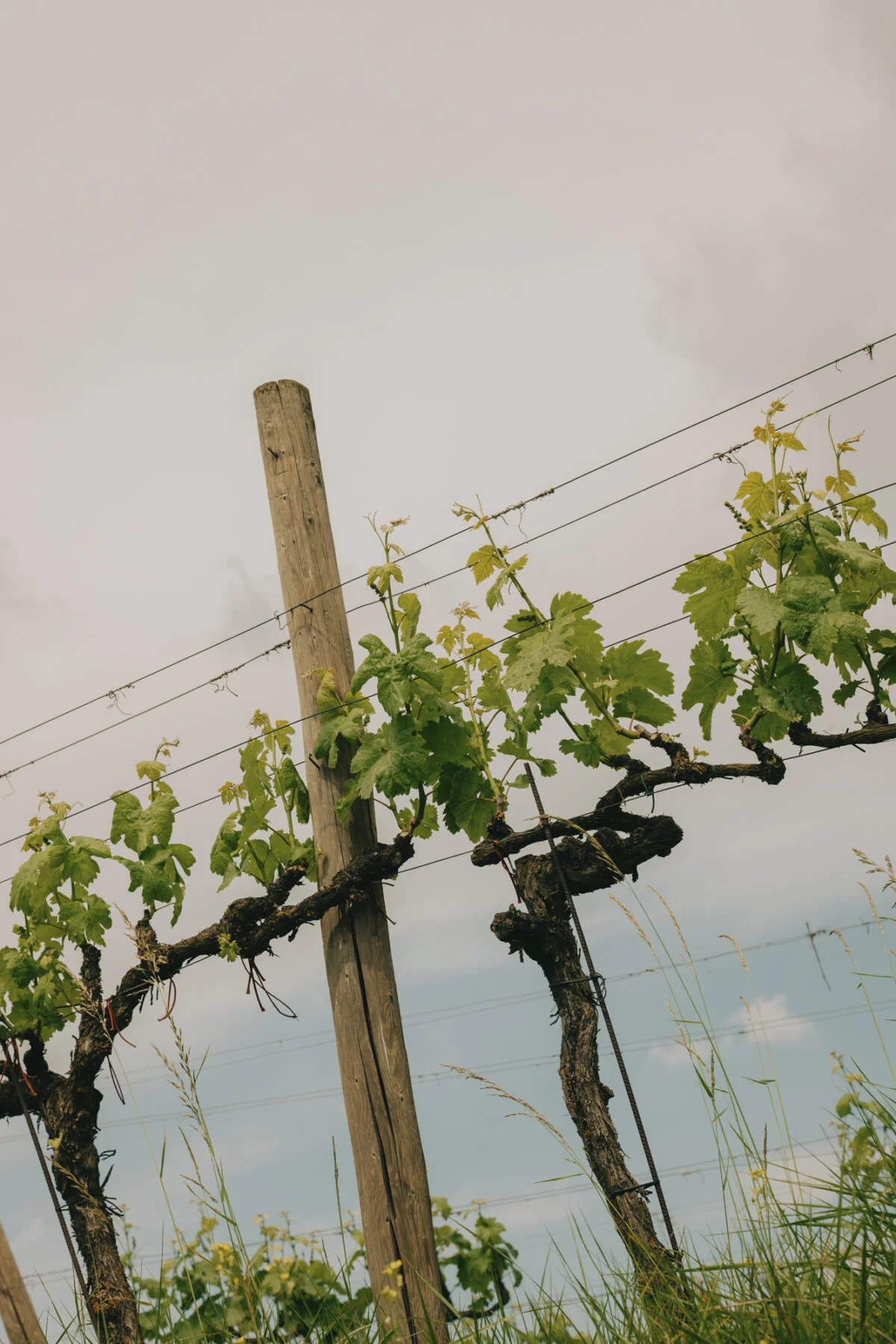
Loess, limestone and the shore of the Tethys Sea
The Wagram owes its name to the striking terrace on the edge of the Danube valley, a
fossil shoreline of the Tethys Sea from the Tertiary period. The thick Ice Age loess deposits, interspersed with lime-rich marine sediment, store water and nutrients like a natural sponge. In the
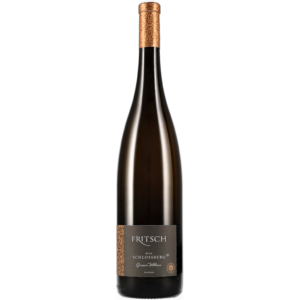
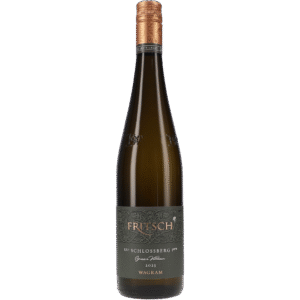
Steinberg, Schlossberg and Mordthal sites, vines grow on schist and granite, which give
Grüner Veltliner an unmistakable mineral tension.
The
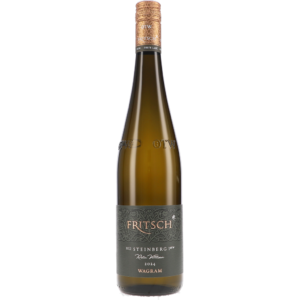
Grüner Veltliner Ried Steinberg, from vines up to 63 years old at 240 metres above sea level, demonstrates the potential of these soils: not overt fruit but
depth, structure and longevity. A wine that can mature in the cellar for years, growing ever more complex.
The philosophy of self-restraint
In 1999 Karl Fritsch junior took over the estate, and in 2006 he took the logical step to
biodynamics, which for him is synonymous with "enthusiasm, life, confidence". Membership of respekt-BIODYN enables close exchange with growers such as
Gernot Heinrich in Burgenland or Clemens Busch on the Mosel, who share the same conviction: that healthy soils and an intact ecosystem are the foundation of authentic wines.
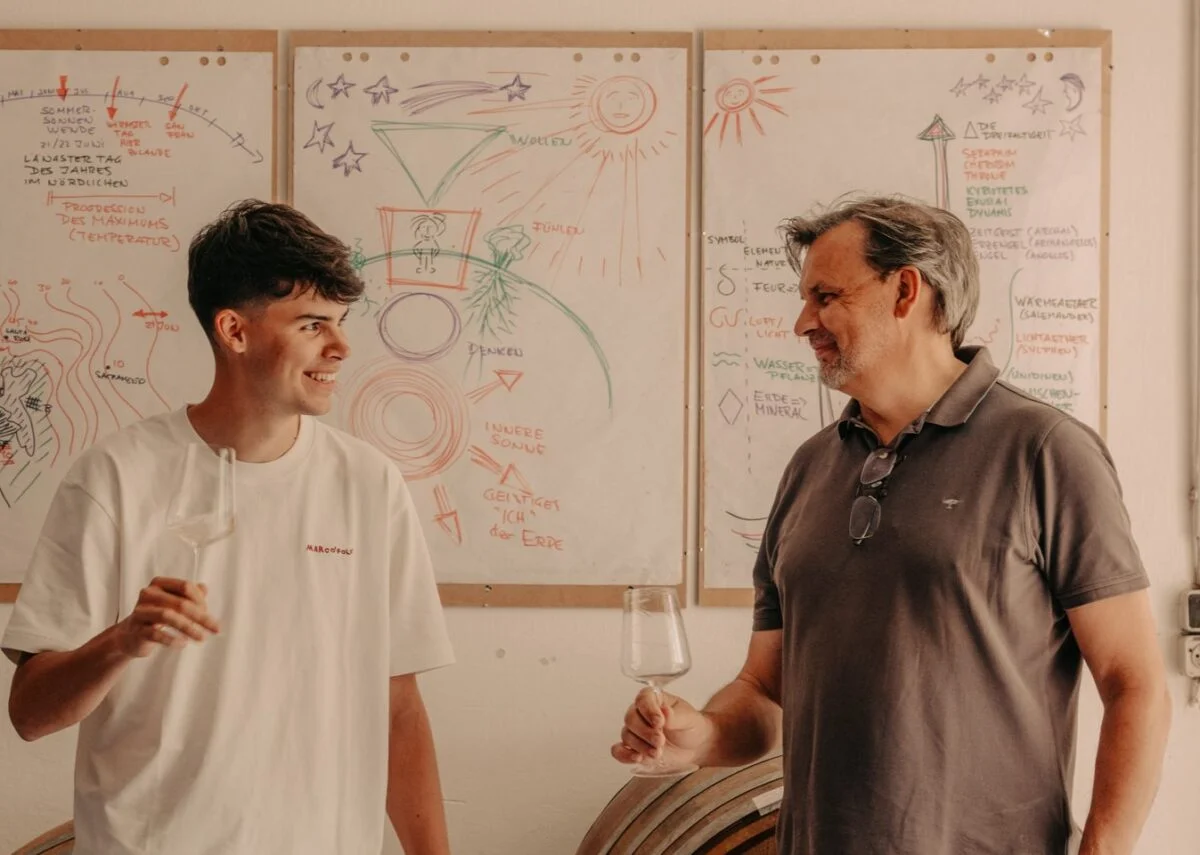
In the cellar hang hand-drawn diagrams of lunar phases, cosmic rhythms and elemental forces: not esotericism but the basis of daily work. Feeding the soil with
home-made compost and applying biodynamic preparations set the rhythm of the year. The vineyards are home to a diversity of plants and animals that acts as a natural buffer against pests.
The quiet rise of Roter Veltliner
While
Grüner Veltliner established the Wagram's fame, Karl Fritsch has brought another grape to perfection:
Roter Veltliner. The variety, whose name refers to the characteristic colouring of the berries' skins, was long considered marginal. In the Ried Steinberg it regularly achieves
94 Falstaff points, scores that make Fritsch the quiet star of the Austrian white wine scene.
Those with a taste for experiment can reach for
Materia Prima: fermented on the skins for ten months, from
Traminer and Veltliner, full of tension and unexpected aromas, an orange wine that polarises and enthrals. And then there is the
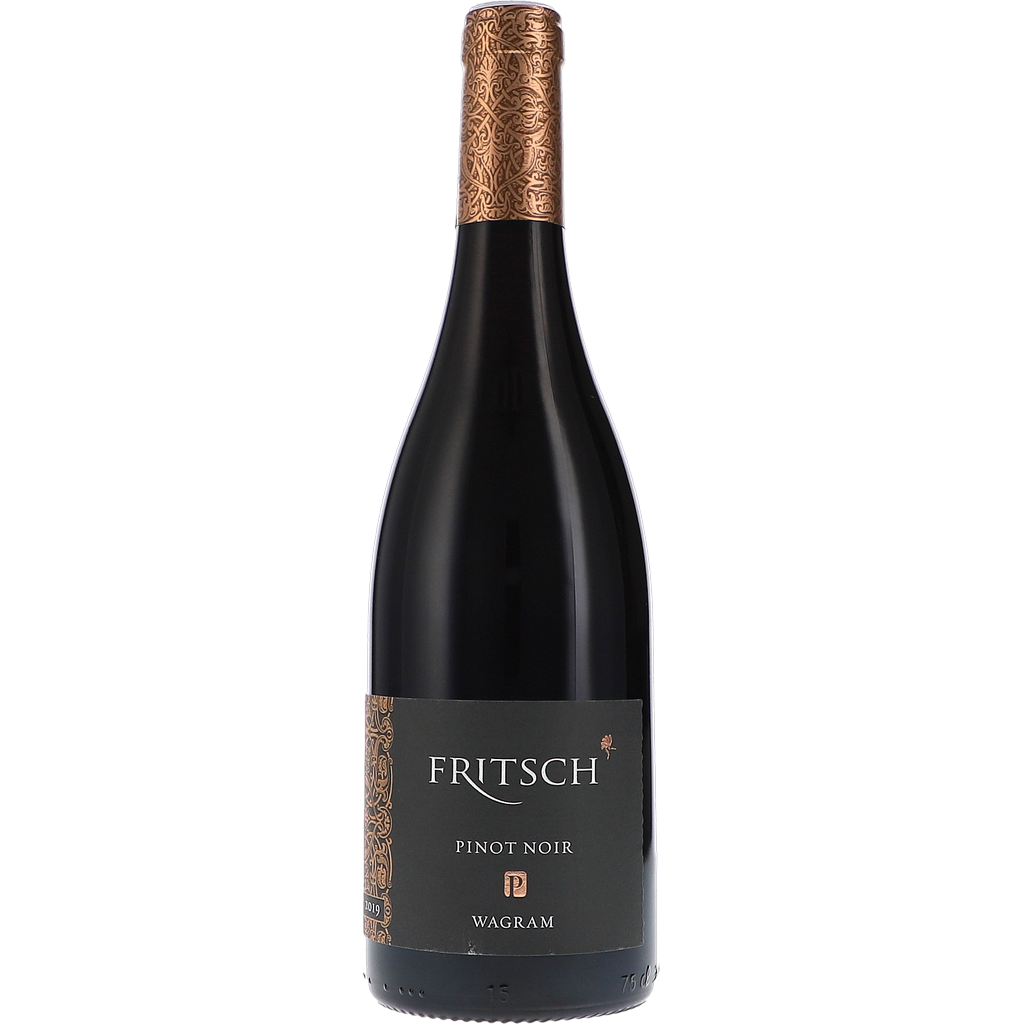
Pinot Noir Ruppertsthal 2022, fermented spontaneously in a used 500-litre barrel, with sour cherry, raspberry, forest floor and white pepper: Fritsch's proof that red wine of international stature can also thrive on the lime-rich loess terraces of the Wagram. Burgundian elegance meets Austrian freshness.