Anyone who had a Biondi-Santi Riserva in their glass during the 1980s was, in truth, drinking the grapes from these parcels on the northern edge of Montalcino.
Le Chiuse has belonged to the same family since 1790, and until 1990 the entire harvest made its way anonymously to Il Greppo, where it disappeared into some of Italy’s most legendary bottles. It was not until 1993 that Simonetta Valiani, granddaughter of Tancredi Biondi-Santi, bottled her own
Brunello. Today, her son Lorenzo Magnelli runs the cellar – working with vines derived from massal selection of the very Sangiovese Grosso clone that his great-great-grandfather Ferruccio selected here 120 years ago.
A Dowry from 1790
Half a century before Brunello was invented, the story of this estate began as a wedding gift: Maria Tamanti brought the land north of Montalcino into her marriage with Clemente Santi – the same Clemente whose grandson Ferruccio Biondi Santi, decades later and on these very slopes, selected the
Sangiovese Grosso clone BS 11 from which the first Brunello was made. Ferruccio's son Tancredi left Le Chiuse to his daughter Fiorella on a single condition: never sell. And so, until 1990, the grapes were quietly delivered to her brother Franco at Il Greppo, where, without a label of their own, they went into the Riservas that Jancis Robinson counts among Italy's longest-lived red wines. It was not until
1993 that Simonetta Valiani bottled her first Brunello under her own name, setting in motion a quiet emancipation that hardly any critic noticed. Today
Lorenzo Magnelli, Simonetta's son, has taken over the cellar work; the vines on his seven hectares come from massal selection of the same clone that his great-great-grandfather picked out here four generations earlier. It is a genetic continuity that few other estates in Montalcino can match.
The North Side of Montosoli
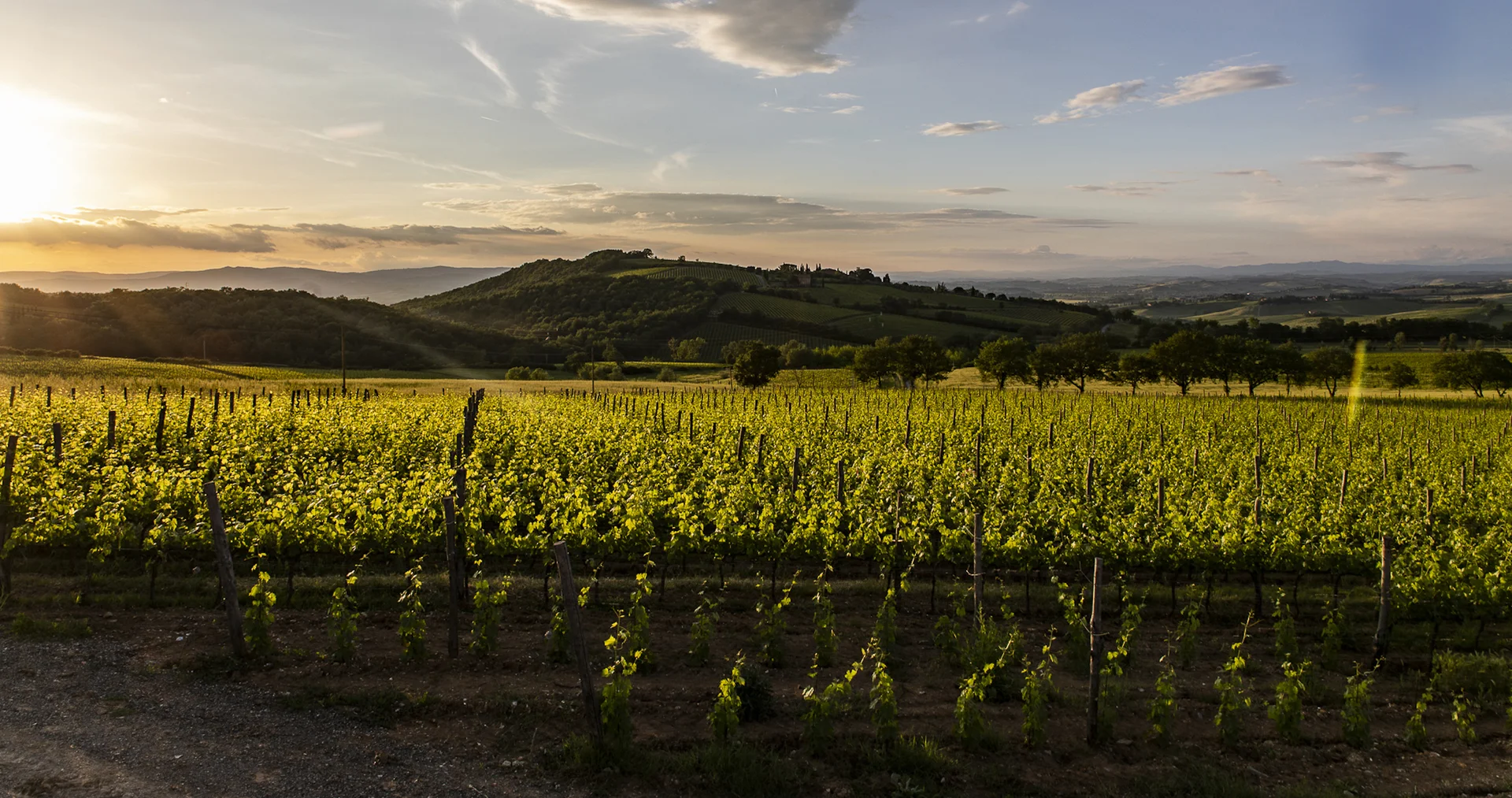
The vineyards lie in the Località Valdicava on the north-eastern flank of
Montosoli, the hill some tasters call the Côte-Rôtie of Brunello: cooler than the south of the appellation, slower to ripen, with aromatics that recall cherry stone, wet iron and wild juniper rather than jam. The seven hectares of pure
Sangiovese are spread over two levels, a lower terrace at around 300 metres and an upper one at almost 500 metres above sea level, high enough for temperatures to drop even on hot August nights. Beneath the vines lie galestro schist, calcareous marl and clay, with a core of volcanic tuff in between. Break a clod and you can feel the flaky layers between your fingers. Yields come in at around 50 hectolitres per hectare, half of what the Consorzio allows. The vineyards have carried the Italian organic seal since 2005.
Three Years in Slavonian Oak
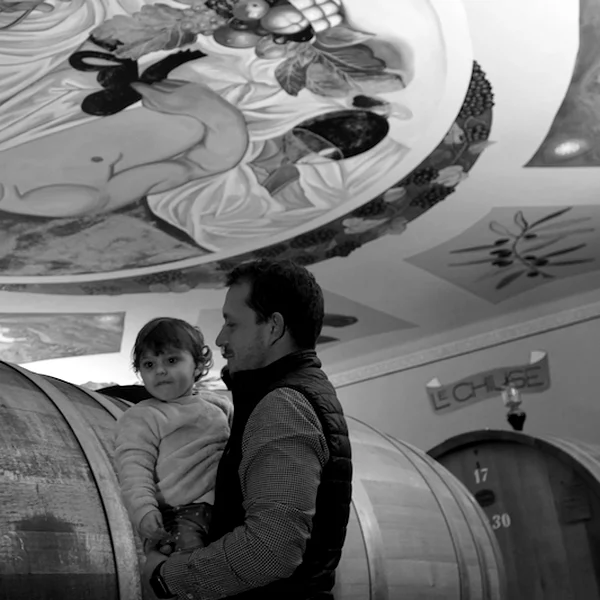
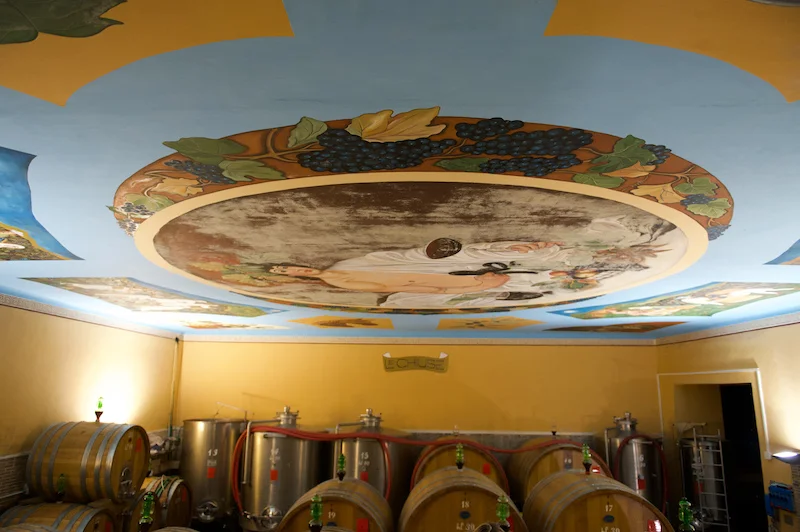
In the cellar, restraint borders on dogma. Spontaneous fermentation with indigenous yeasts, maceration at around 29 degrees, and then
36 months exclusively in large botti of Slavonian oak: not a barrique in sight. The "Diecianni" Riserva, which won Gambero Rosso's
Tre Bicchieri in 2024, even spends four years in wood before it sees the bottle. The cellar is
gravity-fed; the wine finds its way without pumps, moved by the slope alone. Anyone who knows this style can taste it in the glass: finely polished tannins instead of toasty notes, with the cask acting as a lung, not a spice rack. Very few estates in Montalcino share this signature.
Pian Dell'Orino, which lies on the southern slope right next to Il Greppo and almost within sight of Le Chiuse, follows the same school: parcel-driven, organic, no make-up from the barrel.
What Ends Up in the Glass
The
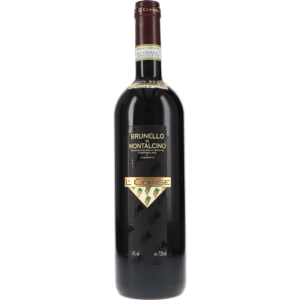
Brunello di Montalcino 2020 stands at 98 points from Kerin O'Keefe, 96 from Wine Advocate, 96 from Jeb Dunnuck and 96 from Decanter. In the glass this means wild strawberry and sour cherry ahead of rose and violet, with fennel seed, dried sage and autumn leaves; on the palate, what Monica Larner describes as "pure silk", with a fine-grained, grippy finish carried by a citrus tension that makes the mouth water. The lighter
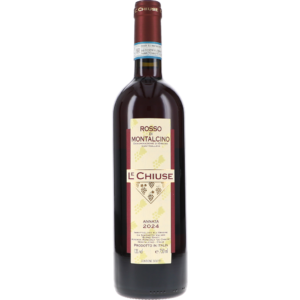
Rosso di Montalcino 2024 comes from the same parcels, only from the younger vines, after about 13 months in large casks. In his vintage report for Vinous, Eric Guido framed it as "elegant, energetic", the bright, floral counterpoint to the structured Brunello and ideal with tagliatelle al ragù or coniglio alle olive. For collectors, the
magnum of the 2020 is well worth considering: in large bottles the wine matures more slowly, and the finely knit structure of this vintage will carry it for two decades, just as the 2016 is already doing (Wine Spectator Top 100, number 5) and as the 2019 has yet to prove, a wine Michaela Morris scored 99 points in Decanter, making it one of the highest-rated Brunello annatas ever.