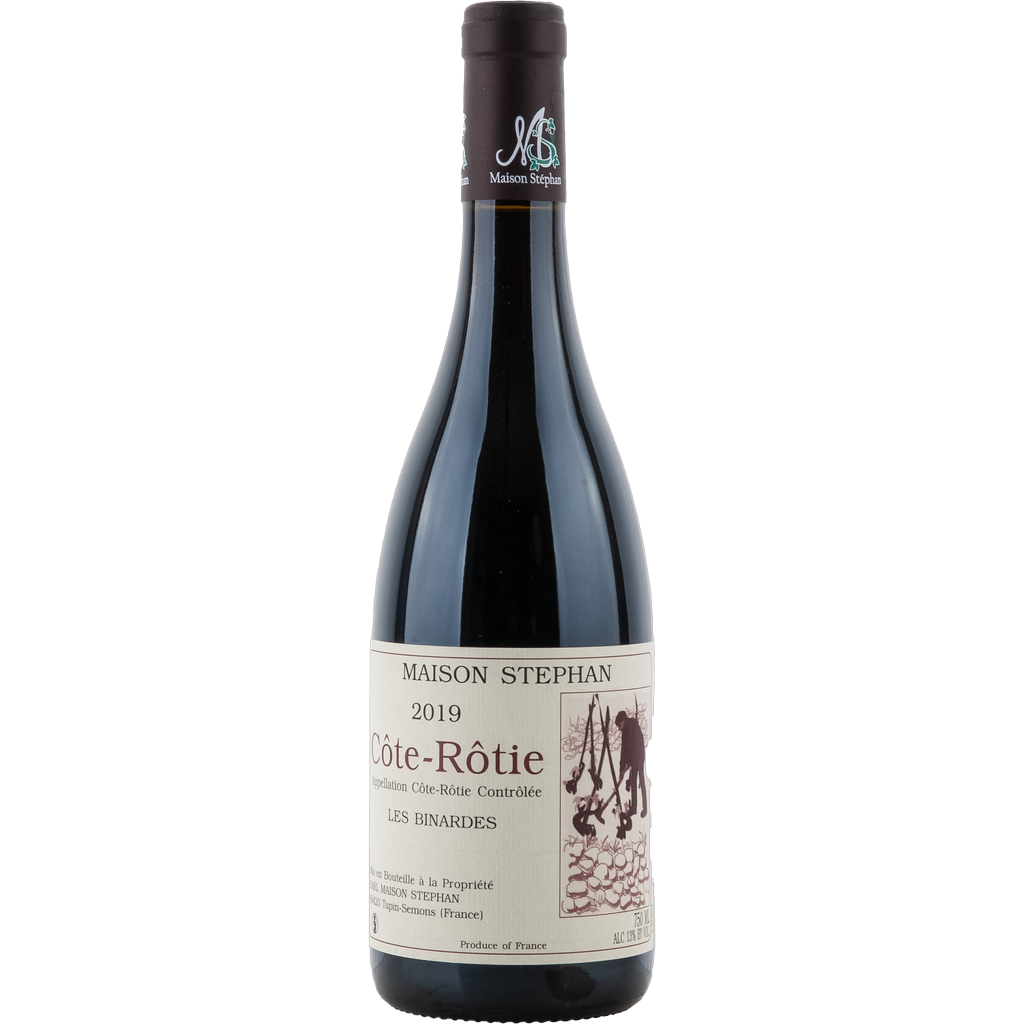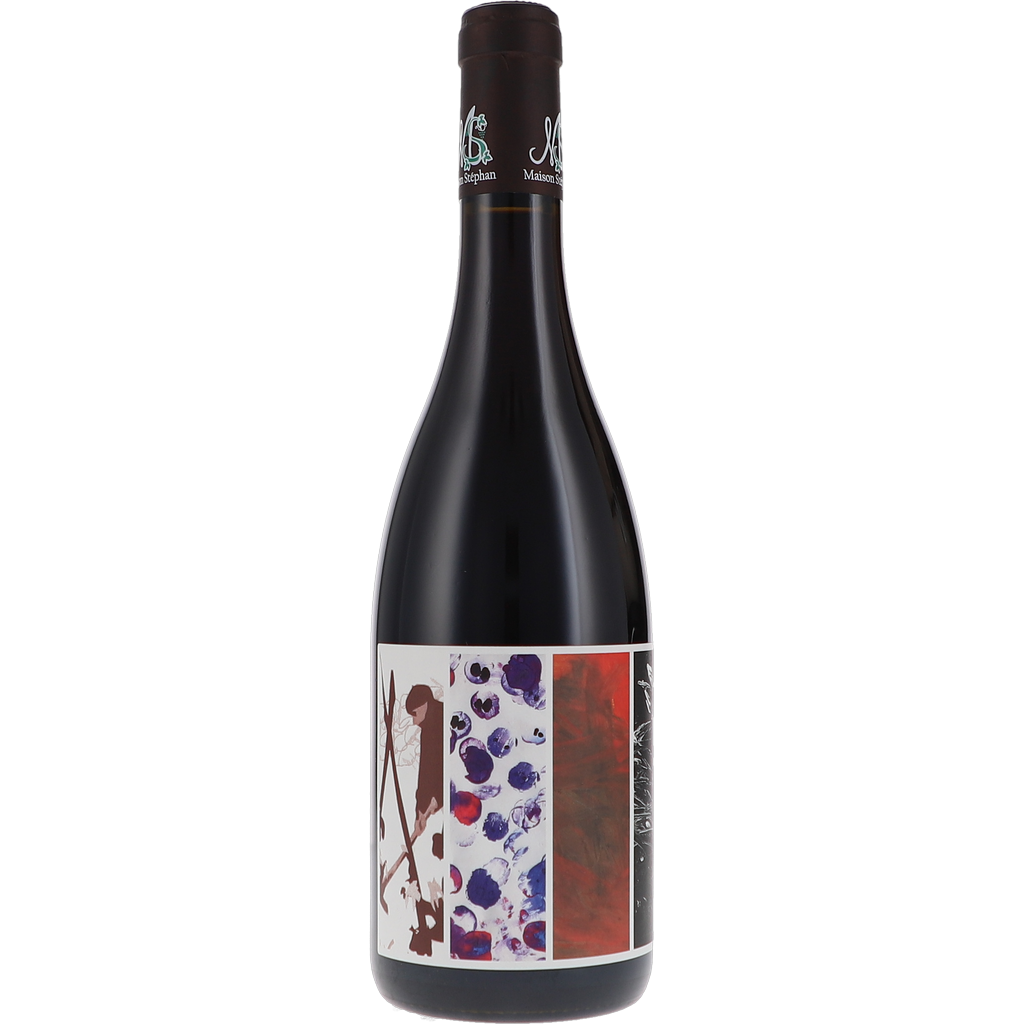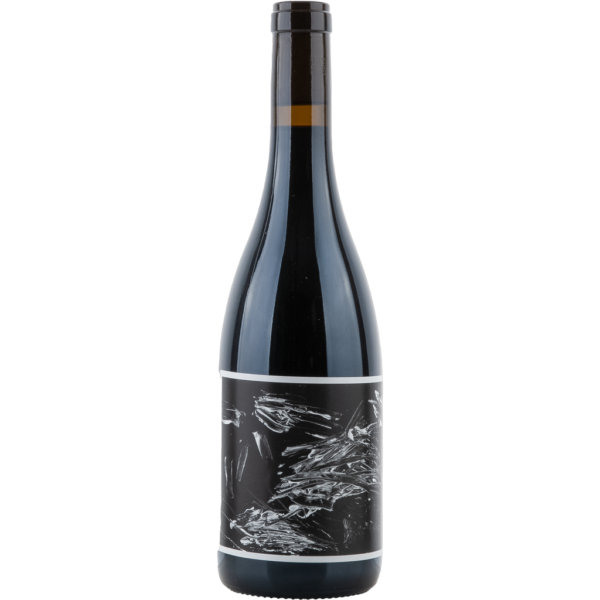
Côte Rôtie "Côteaux de Tupin" AOC 2018
The Côte Rôtie "Côteaux de Tupin" 2018 from Maison Stephan is a red wine made from 100% Serine, grown on gneiss and aged 24 months in small oak barrels.
CHF 139.50
Prices in CHF, including customs duty and all import charges, plus shipping CHF 15 (free from 12 bottles or CHF 300) — no further charges on delivery.
Available for Switzerland
✓ On your wishlist. — View wishlist
About this wine
Character
A dark, densely built Côte Rôtie that doesn't flaunt its power but binds it into structure. Dry, 14.5% ABV, and clearly still at the very start of its development.
Terroir and origin
The vines grow near Tupin-et-Semons on the steep slopes of the Côte-Rôtie, on gneiss soil. Maison Stephan farms 4.5 hectares here largely by hand; horses are used for tilling the soil, with winches employed on the steepest plots. Yields stand at 30 hectolitres per hectare.
Grape variety and vinification
100% Serine, an old, indigenous relative of Syrah that the estate preserves through massale selection. The vines were planted in 1992. The hand-harvested grapes ferment partly as whole berries in carbonic maceration; the wine is aged 24 months in small oak barrels and bottled without filtration and with a minimal sulphur addition.
On the palate
The opening is velvety, reminiscent of violet pastilles, before acidity and tannin take hold. The nose is deep and dark: wild raspberry, blueberry compote, sloe, elderberry and dried plum, alongside dark chocolate, freshly brewed coffee, black pepper and clove. Those opening the 2018 now should aerate it for several hours beforehand and serve it in a large Burgundy glass; it will only show its full form in a few years' time.
Food pairing suggestions
Lamb shanks braised with green beans and bacon, pigeon with liquorice sauce, Brussels sprouts and potato gratin, or, for a lighter start, tapenade of olive paste and Mediterranean herbs on grilled rye bread.
Special features
Jean-Michel Stephan started out in the Côte-Rôtie in 1991; since 2017 his son Romain has been working alongside him. Since 1997 the wines have been made without oenological additives.