- Producer
- Heinrich
- Grape variety
- Muskateller, Pinot Blanc (Weißburgunder)
- Region
- Burgenland
- Country
- Austria
- Vintage
- 2022
- Alcohol
- 12 % vol
- Volume
- 0.75 l
- Item no.
- 9870003115
Shipped with DHL Express — customs cleared to your door. · Flat-rate shipping CHF 15.00 — free from 12 bottles or CHF 300.00. · Pay by TWINT or card.
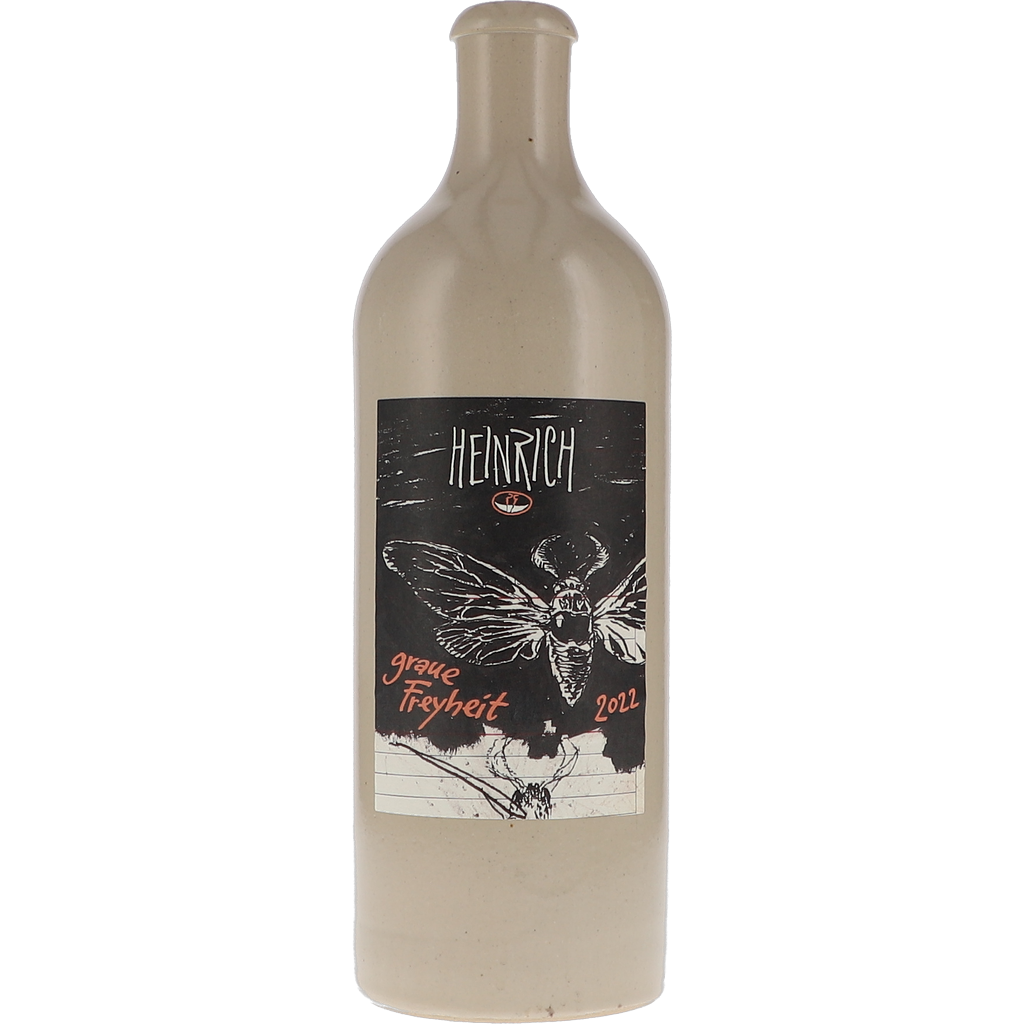
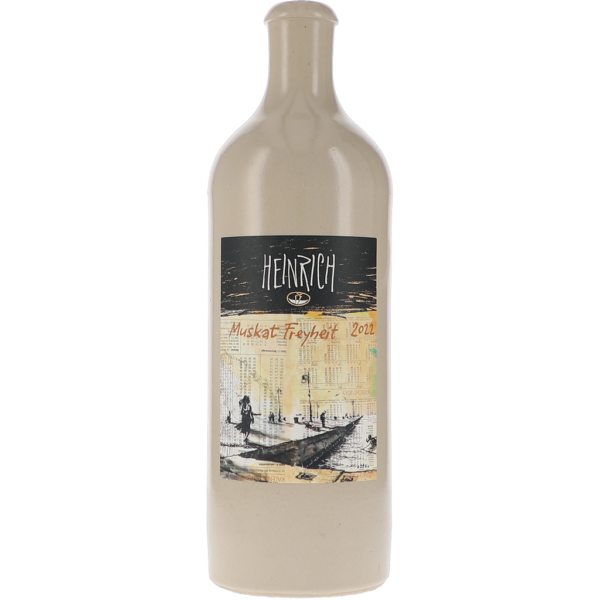
Muscat Freyheit 2022
Orange wine made from Gelber Muskateller and Weissburgunder by the biodynamic Heinrich estate in Gols by Lake Neusiedl.
CHF 34.50
Prices in CHF, including customs duty and all import charges, plus shipping CHF 15 (free from 12 bottles or CHF 300) — no further charges on delivery.
Available for Switzerland
✓ On your wishlist. — View wishlist
About this wine
Character
The Muscat Freyheit 2022 is an orange wine from Burgenland, vinified from Gelber Muskateller and Weissburgunder. At 12.0% ABV, it is light-bodied and vinified bone-dry, translating the floral fragrance of Muskateller not into sweetness, but into a taut, clear structure.
Terroir and Origin
The winery is located in Gols by Lake Neusiedl in Burgenland. Gernot and Heike Heinrich started in 1990 with two hectares of their own vines and today cultivate one hundred hectares, fully biodynamically. The estate expanded by acquiring plots that others abandoned: steep, stony sites on the Leithaberg with cool limestone and on the Parndorfer Platte with gravel and red slate.
Grape Variety and Vinification
The Freyheit line is Gernot Heinrich’s range for skin-contact orange wines. The white grapes spend fourteen days on the skins—a process that sounds like an experiment but tastes like sheer precision. Maturation takes place in clay amphorae, which enable micro-oxidation without imparting oak aromas, and in large, seasoned wooden casks crafted by regional cooper Klaus Pauscha. The cellar relies strictly on gravity flow, entirely without pumps.
On the Palate
The bouquet evokes lychee and rose petals. On the palate, the wine remains dry and taut; the aromatic grape variety provides expressive character without ever allowing the wine to become broad.
Special Features
The Heinrichs converted to biodynamic viticulture in 2006 following an inspiring encounter with biodynamics expert Andrew Lorand. In 2009, they were among the founding members of the respekt-BIODYN association, one of the strictest biodynamic certifications in Austria. The estate has been Demeter-certified since 2017.