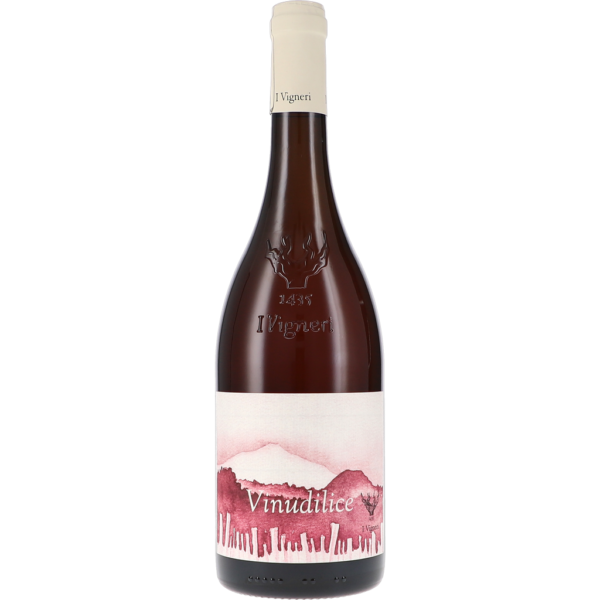
Vinudilice Rosato 2024
The Vinudilice Rosato 2024 is a dry rosé from I Vigneri di Salvo Foti, grown on lava soils on Mount Etna and crafted from three indigenous Sicilian grape varieties.
CHF 39.00
Prices in CHF, including customs duty and all import charges, plus shipping CHF 15 (free from 12 bottles or CHF 300) — no further charges on delivery.
Available for Switzerland
✓ On your wishlist. — View wishlist
About this wine
Character
Pale, dry, built on tension. The Vinudilice Rosato draws its energy from acidity and salinity rather than richness. At 12.0% ABV it stays light-footed without feeling thin; red fruit and cool minerality sit side by side rather than layered on top of each other.
Terroir and origin
The vineyards of I Vigneri lie on Mount Etna, Europe's highest active volcano, at altitudes of up to 1,200 metres. The soils are black and mineral-rich, formed from cooled lava, volcanic ash and sand. The vines are trained as alberello, the historic bush-vine method that UNESCO has declared a World Heritage practice: each vine is tended individually by hand, supported only by chestnut stakes from Etna. Iron posts, concrete pillars and wires have no place in these vineyards.
Grape variety and vinification
A blend of Minnella, Alicante and Grecanico, harvested from old vines, often ungrafted, that yield only small quantities. The grapes are gently processed in the historic palmento, the traditional press. Fermentation proceeds spontaneously with wild yeasts, and ageing follows in neutral vessels, used wooden casks and cement tanks. Salvo Foti rejects any chemical intervention.
On the palate
Pale salmon pink with copper highlights. On the nose, red berries, citrus and Mediterranean herbs, underpinned by a mineral note. Dry, with juicy acidity and fine structure, the finish salty and long.
Food pairings
Pairs with grilled sardines, caponata and pasta alla Norma, as well as arancini, young pecorino or pane cunzato with tomatoes and anchovies.
Distinctive features
Salvo Foti is regarded as a guardian of Sicilian winemaking tradition. Bringing three indigenous varieties together in a rosé is rare; the result is a wine that speaks of the volcano's terroir.