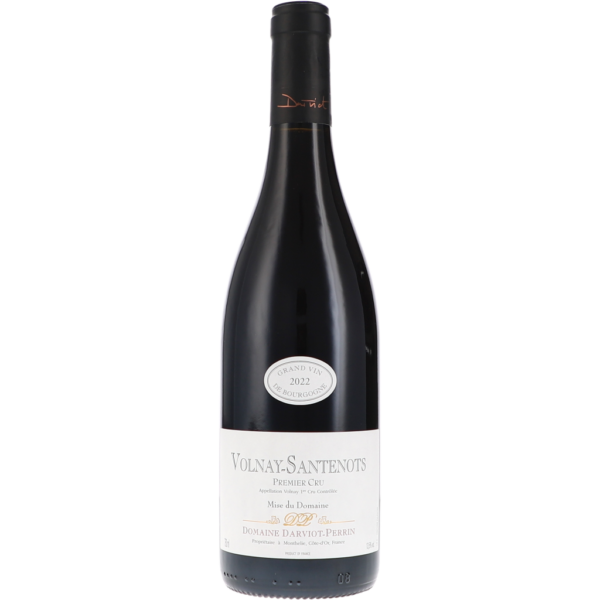
- Producer
- Darviot-Perrin
- Grape variety
- Pinot Noir (Spätburgunder)
- Region
- Burgund
- Country
- France
- Vintage
- 2022
- Alcohol
- 13.5 % vol
- Volume
- 0.75 l
- Item no.
- 9910247037
Shipped with DHL Express — customs cleared to your door. · Flat-rate shipping CHF 15.00 — free from 12 bottles or CHF 300.00. · Pay by TWINT or card.
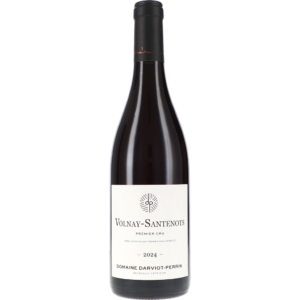
Volnay-Santenots 1er Cru AOC 2022
The Volnay-Santenots 1er Cru AOC 2022 from Darviot-Perrin is a Pinot Noir from vines planted in 1927, farmed biodynamically and bottled unfined.
CHF 120.00
Prices in CHF, including customs duty and all import charges, plus shipping CHF 15 (free from 12 bottles or CHF 300) — no further charges on delivery.
Available for Switzerland
✓ On your wishlist. — View wishlist
About this wine
Character
A premier cru that holds concentration and finesse together. The vines planted in 1927 give the wine depth, while the 2022 vintage keeps the fruit young and pure. Vinified dry, 13.5% vol.
Terroir and origin
Les Santenots sits on Meursault soil but is classified under Volnay. This climat is the centrepiece of the seven premiers crus that Pierre-Antonin Darviot farms across eleven hectares in the Côte de Beaune. The family seat is in Monthélie, where the Darviots have owned parcels since the 19th century.
Grape variety and vinification
Pinot Noir, fermented with up to 100% whole clusters. The stems contribute floral notes and fine tannins. The estate is farmed biodynamically, with no fining or filtration in the cellar and minimal use of sulphur. The estate has been certified organic since 2022.
On the palate
Deep ruby red with violet reflections. On the nose, ripe cherry and raspberry, along with floral notes, delicate spice and a hint of undergrowth. The tannins are silky, the drive stays mineral, and the finish is long.
Food pairing suggestions
Herb-crusted rack of lamb, duck breast with red wine jus and saddle of venison with mushrooms. Also excellent with roast chicken with bacon and onions or a mature Époisses.
Special features
Pierre-Antonin Darviot studied oenology in Beaune and gained experience in the Loire and New Zealand. He returned to Monthélie in 2017 and, at 25, took over the domaine in 2019, converting it to biodynamic farming. The Volnay-Santenots comes from vines planted in 1927.